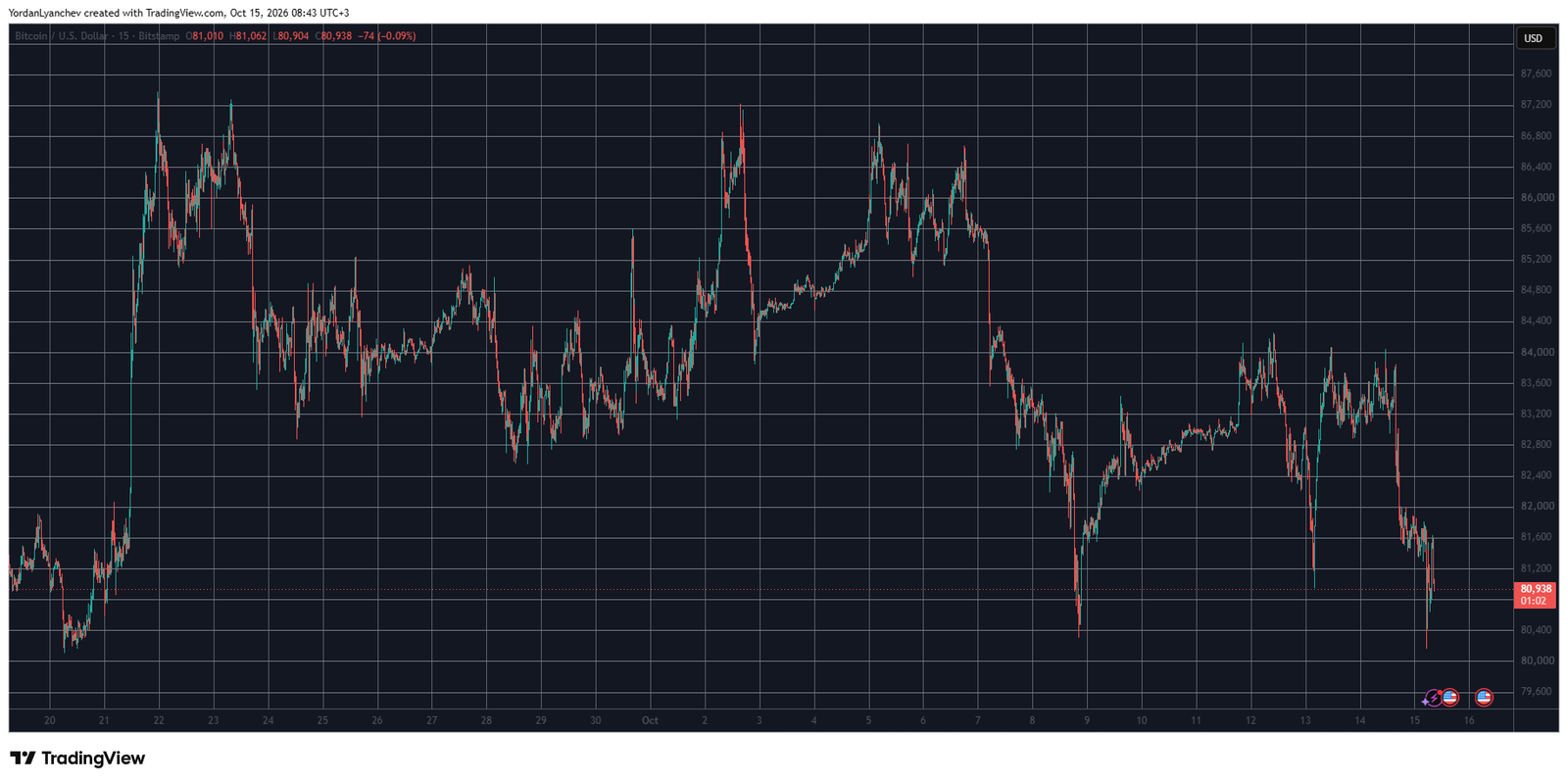
The unfavorable Bitcoin price action that began at the start of the previous business week culminated with another fall earlier this morning to just over $80,000 on most exchanges.
This means the asset has tested this key support for the first time in almost a month. Here are some of the possible reasons.
Pain in Asia
Earlier this week, Tom Lee warned that the major correction experienced by Asia’s largest stocks could result in a further downturn in cryptocurrency markets. At the time, South Korea’s stock market fell 5% at one point, while Japan’s Nikkei 225 fell from 69,000 on Friday to 67,130 on Tuesday.
After both indices attempted to rebound in the following days, the situation deteriorated over the past 24 hours. The Nikkei fell about 6% in the last 24 hours alone, falling from 68,375 to 64,130 before rebounding slightly to 64,685 at press time.
Korea’s KOSPI performed even worse. It was trading at 6,800 last Thursday before falling to 6,000 at the start of the current business week. The weak attempt at recovery pushed it north to 6,250 before collapsing again in the last 24 hours to 5,550. This means that the index is down over 18.5% in the last 5 days and almost 8% in the last 24 hours alone.
As such, it is perhaps no surprise that BTC dumped twice this week during Asian trading hours. Its latest drop took place just a few hours ago, when it dropped all the way to a monthly low of $80,200.

CPI and ETF
Macroeconomic pressure intensified yesterday when September CPI data came in slightly better than expected. Similar developments are considered bearish for risky assets such as cryptocurrencies, especially since they tend to influence the Fed’s decision-making process.
After yesterday’s announcement, the price of BTC immediately fell by more than a thousand dollars, while the chances of a Fed rate hike in October sautéed from about 20 to 25% to 50%.
“This means inflation is widening, which does not bode well for the Fed and would increase the likelihood of a rate hike at the end of the October FOMC meeting,” said Eugenio Aleman, chief economist at Raymond James. The next FOMC meeting is just two weeks away.
The ETF market immediately felt the impact. SoSoValue data shows daily flows fell from $175.62 million in the green on Tuesday to $261.46 million in the red after the CPI announcement. Such major changes create selling pressure.
Liquidations close to $1 billion
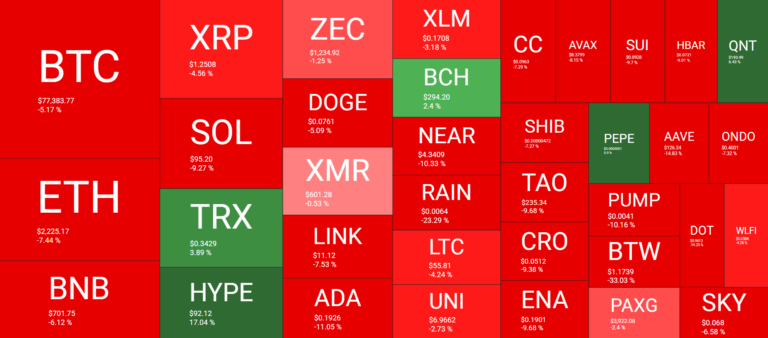
The substantial drop in Bitcoin price was not an isolated move, as altcoins followed suit, as they typically do. Ethereum was particularly vulnerable, as it fell towards $2,300. Naturally, the total value of destroyed positions is on the rise again, given the importance of leverage in the market.
More than $960 million in leveraged positions were wiped out daily, including $883 million from long positions. ETH is responsible for the lion’s share, $290 million.

The article Why Did Bitcoin Suddenly Crash to $80,000? appeared first on CryptoPotato.
About the Author