
In recent days, Robinhood Chain metrics are up and to the right. Transactions, volume, revenue, deployments, etc.
A growing field of native applications like Pons, HintAnd Stocknetall of which can be, or are explicitly designed to be, used with the L2’s burgeoning distribution of tokenized actions, e.g. NVDA, AAPL, SPCX, GOOGLEetc.
Memecoins now trade against stocks on Bankless
Memecoins associated with stocks are the latest meta on Robinhood Chain.

Among these, one particular project that is making big waves today involves allowing users to stake their tokens from the Robinhood Chain ecosystem (both apps And stock tokens) to work in old-school DeFi yield farms reminiscent of Yam Finance from 2020.
The project? Mature protocol. This is a classic degen opp, and right from the start, so be careful if you explore. But even if you don’t, Ripe could revitalize Yam’s “food farms” style again, so it’s worth catching up on the basics either way.
The Ripe 101
Ripe is a multi-collateral borrowing protocol.
Instead of vaults siled by asset (i.e. the Maker model where 5 assets means 5 separate loans + 5 separate liquidation risks), Ripe is designed to allow you to deposit your entire wallet, ETH, stablecoins, tokenized stocks, etc., then borrow a single stablecoin, GREENagainst all of this at once.
Ripe is live on Robinhood Chain.
Deposit tokenized shares. Borrow GREEN against them. Maintain position, maintain advantage.
The oldest trick in private banking, now on-chain. https://t.co/73ngRjvjUL
– Ripe Protocol (@ripe_dao) August 27, 2026
Naturally, GREEN aims for a $1 anchor and burns on every redemption, while its yield version, GREENautomatically aggregates protocol revenue for anyone who prefers to hold rather than actively manage a loan.
As for the collateral types supported, Ripe currently accepts WETH as well as tokenized stocks issued by Robinhood NVDA, AAPL, SPCX, GOOGL, TSLA, and GME, each at a fixed borrowing rate of 70% and 7%.
Do you like this article?
Subscribe to Bankless or log in
For example, you can deposit tokenized GME, borrow GREEN against it, and keep the stock rising without selling. This is precisely the type of programmable equity financing that Robinhood Chain was designed for.
Search farms
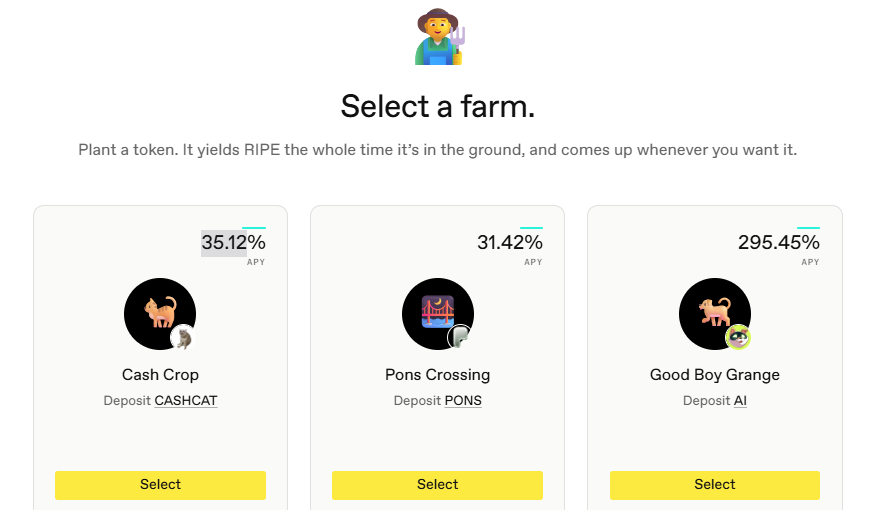
Alongside the borrowing side, Ripe currently manages WALL token distributions across a set of protocol vaults and community farms, i.e. traditional liquidity mining.
You can find these farms on Ripe Earnings Page or, if you prefer a more nostalgic and detailed configuration, thanks to the new vfat.tools Ripe Dashboard.
Most yields shown here are extremely juicy right now, but these APY/APR fluctuate based on the volatility of the RIPE price, so don’t consider rates that you consider ironclad at any given time.
The farms themselves are divided into two categories, protocol vaults And community farms.
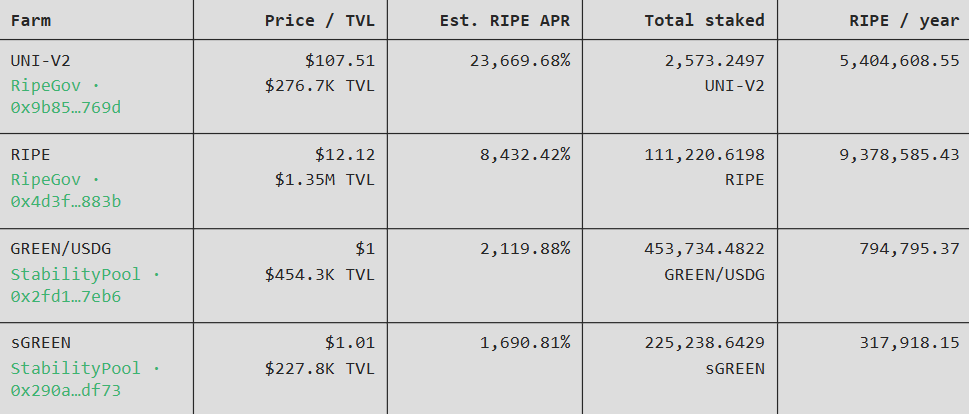
Per vfat, the RIPE/NVDA LP farm (aka UNI-V2) and RIPE farm are currently the best performing protocol vaults, nominally offering ~23,669% APR and ~8,423% APR respectively at the time of writing.
When it comes to community farms, these opportunities allow you to make one-sided deposits of popular Robinhood ecosystem assets such as PONS, CASHCAT, STONKBROKER, etc. For example, the sNET farm currently offers an APR of around 3,211% with a TVL of almost $5 million.
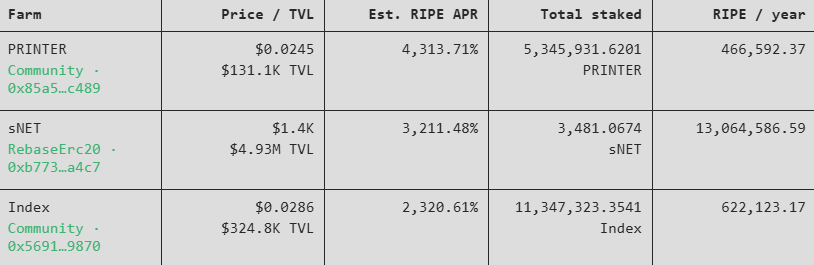
Of course, these are eye-popping rates that can’t stay this high forever, or can even collapse overnight due to a protocol bug, as we saw with Yam back in the day.
Therefore, do not take these returns as a safe bet and, as always, never deposit more than you can afford to lose. But If you’re feeling nostalgic for a new burst of classic DeFi liquidity mining on Robinhood Chain in particular, Or If you just want to stay on top of the latest stuff catching fire in L2 this week, these farms are hot spots to consider.