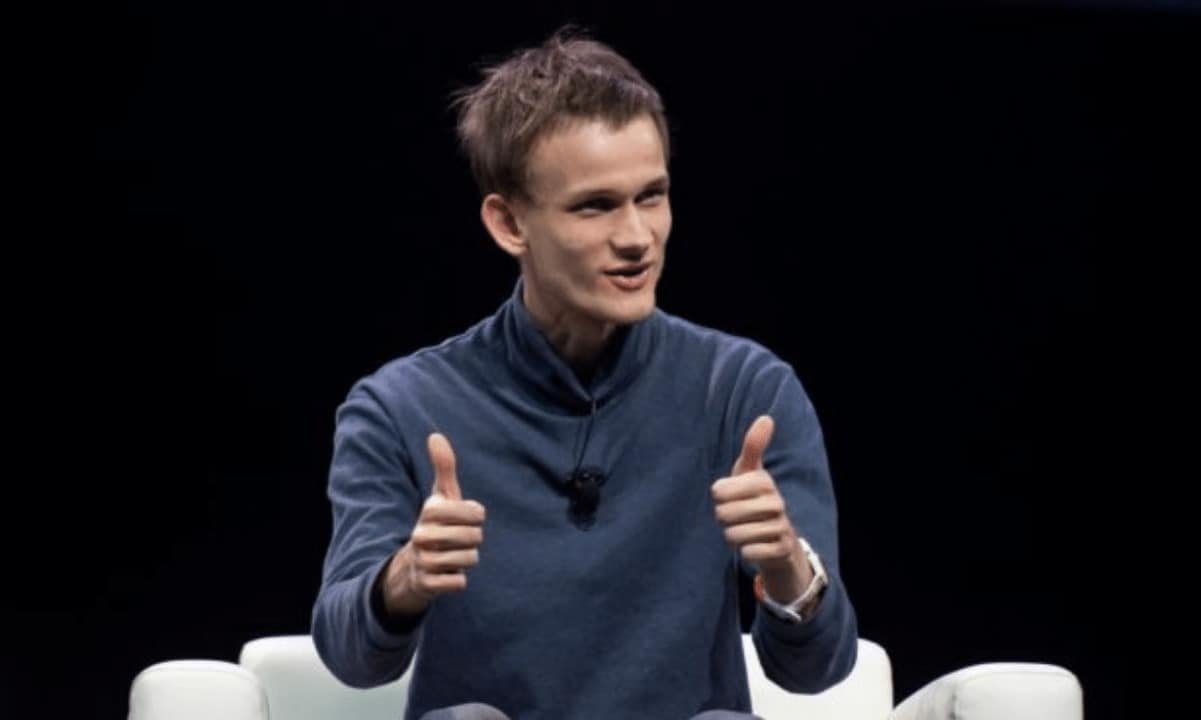
Ethereum co-founder Vitalik Buterin said in an article on X on Monday that he was comfortable with the Kimi 3.1 AI model deliberately leaving high-end offensive cyber capabilities out of its training data.
He says the tradeoff is worth it because it gives defenders more time to prepare.
Restrict use cases, not users
“Discrimination against use cases is MUCH less bad than discrimination against users,” Buterin wrote.
The world, he addedneeds time to harden systems and verify old code before “the full brunt of very powerful cyberattacks is upon us.” Clearly, he prefers a model that refuses certain tasks to everyone rather than a model that refuses certain people.
He also sketched out what could go wrong. If “this first big wave of AI risks is not managed well,” he warned, the result could be a “dystopia of highly locked-down models,” with KYC checks, which link an account to a verified identity, required for everything, and corresponding intrusive surveillance. Depending on their qualifications and nationality, a person can become a “second, third or fourth class citizen” in terms of model access.
Asked by user X LOID if other labs would develop these capabilities anyway, Buterin replied: “Yes, of course they will. » Besides this argument about time, filtering aims to delay these abilities rather than prevent them.
Not everyone agreed. “Disagree at all” wrote Developer Youssof Al Toukhi, who discussed the recent attack on Hugging Face by an OpenAI model, and when Hugging Face attempted to analyze the attackers’ actions using boundary models, vendor security guardrails blocked the requests, forcing a move to an open model, GLM 5.2. Calling the arrangement a “system of elitism” that “will only get worse with time,” the critic added: “Intelligence must be democratized.”
Earlier Notes on AI and Code Security
As CryptoPotato Previously reported, Buterin countered fears in May that AI-powered bug finding would overwhelm developers and create non-stop openings for exploits, arguing that AI-assisted formal verification could become one of the strongest defenses in crypto.
He says a model can now write both the code and its proof, leaving it up to developers to confirm that the proven statement is the one they wanted. His Monday message cites formal verification of the new codes among the work that requires additional time. This May 19 post appeared as a hacker removed more than $76 million from the Echo Protocol cross-chain bridge, the third major exploit in four days.
On October 8, he warned that AI-assisted mathematics could weaken ECDSA and similar cryptosystems sooner than expected, while adding that users should not “rush to transfer their funds to new wallets today.”
The post Vitalik Buterin Supports Kimi 3.1 Limits on Advanced Cyberattack Tools appeared first on CryptoPotato.
About the Author