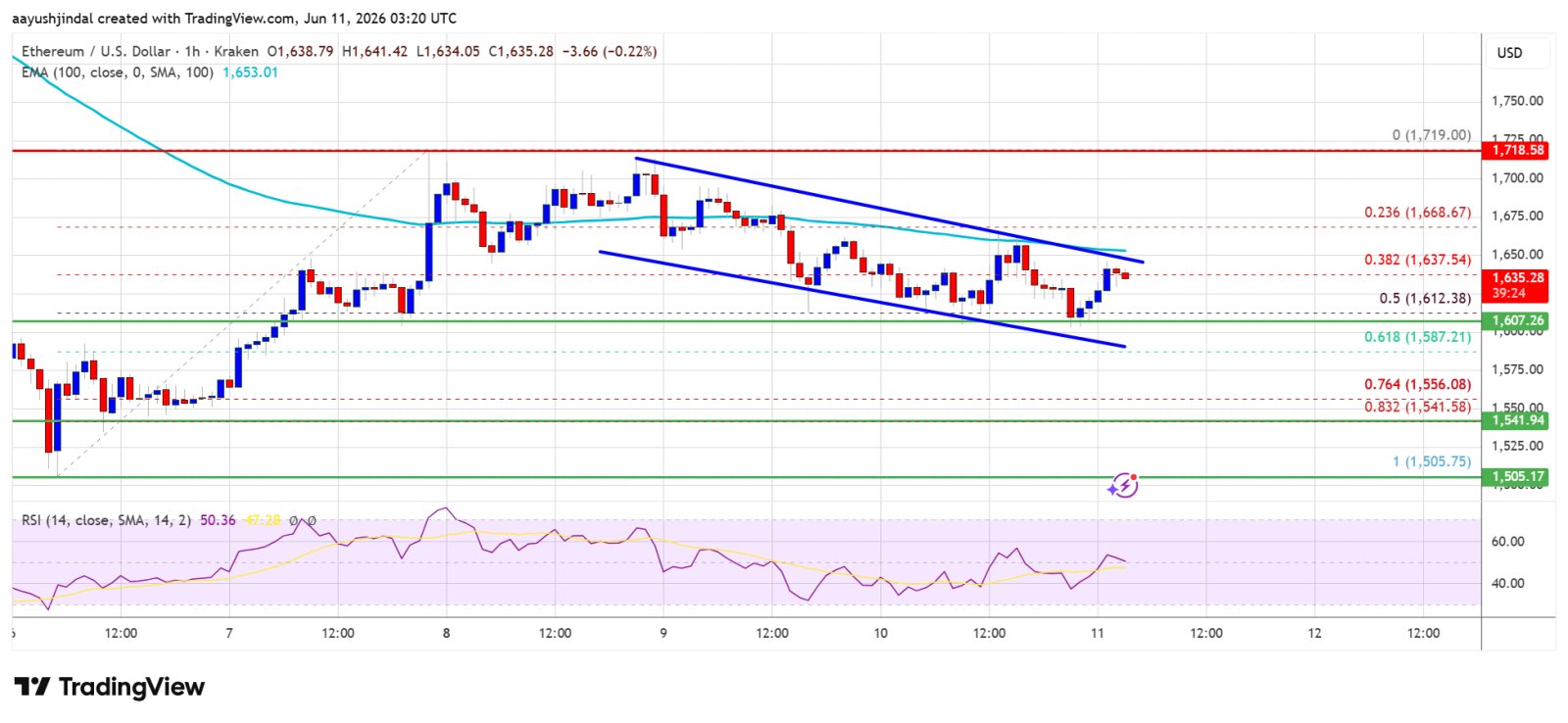
Ethereum surged 18% during the day as spot trading volume rose sharply on major global exchanges, putting ETH at the center of market risk developments.
Market data showed that ETH was trading near the $2,500 level during the rally, with spot volume reportedly increasing by around 400% compared to the previous 24-hour average.
This is a major measure, but requires careful reading.
A sudden surge in volumes may reflect strong demand, but it may also include forced positioning, short covering, continued momentum, FX rebalancing, and rapidly changing liquidity. The next question is whether ETH will be able to maintain the move once the first wave of volume cools off.
TL;DR
- Ethereum rose 18% during the day.
- Spot trading volume reportedly jumped by around 400%.
- This move should not be treated as a guaranteed trend change until a follow-through appears.
Why volume matters
The price may change on low liquidity.
Volume tells us if more market participants were involved.
An 18% move with low volume might look shaky. An 18% move accompanied by a sharp rise in volume suggests broader participation. This doesn’t guarantee the rally will continue, but it makes the move harder to view as a random streak.
For Ethereum, the increase in volume is particularly important as ETH was competing for attention with Bitcoin’s push toward $70,000 and new ETF inflows.
A strong ETH session reminds the market that Ethereum can still dominate risk appetite when conditions align.
Spot demand is the key question
The most important thing is whether the movement was carried out in an ad hoc manner.
Spot volume suggests actual buying and selling of ETH rather than simple derivatives positioning. If cash buyers are driving the rally, it may be more sustainable than a move based solely on the liquidation of leveraged shorts.
But the distinction is not always clear.
Spot volume may increase because arbitrage desks, market makers, and derivatives hedges react to futures activity. Crypto markets are deeply connected and price action often moves between spot and derivatives markets simultaneously.
This is why follow-up is important.
Ethereum has multiple catalysts in the background
Ethereum’s rally did not happen in isolation.
The market is also monitoring ETF inflows, ETH corporate treasury activity, the staking economy, token asset growth, and a broader risk appetite. ETH may benefit when traders look beyond Bitcoin to assets with higher beta and stronger ecosystem narratives.
Ethereum also has a different institutional history than BTC.
Bitcoin is the rare and macro asset. Ethereum is the smart contract, stablecoin, DeFi, tokenization and staking infrastructure asset. As investors become more comfortable with crypto risk, ETH can move quickly.
Don’t turn a volume spike into a forecast
A 400% increase in volume is significant, but it is not a prediction.
Markets can surge in large volumes and still pull back. Traders can take profits. Leverage could rebuild too quickly. Macroeconomic conditions may change. Bitcoin could fail at the resistance level and drag the market lower.
The responsible reading is that ETH had a powerful intraday session supported by unusually intense spot activity.
It’s optimistic at the moment. This is not evidence of a permanent escape.
What to watch next
The following signals are simple: is volume remaining high and are prices holding at higher levels?
If ETH consolidates near the rally zone with continued spot interest, the move could turn into a stronger trend. If volume decreases and prices pull back quickly, the rise may look more like a quick squeeze and momentum event.
ETF flows will also be strong.
If Ethereum ETFs continue to see inflows alongside spot purchases, the institutional story becomes stronger. If ETF demand remains weak, the rally could remain primarily crypto-native.
For now, Ethereum has brought the kind of move that has traders paying attention again.
The next test is whether buyers stay after the peak.
This article is based on public Ethereum market data from August 20, 2026.
This article was written by the News Desk and edited by Samuel Rae.
About the Author