
The correlation between the leading cryptocurrency and the largest financial asset, gold, has reached its highest level since the 2020 pandemic, while its relationship with the Nasdaq has weakened significantly.
The move comes as concerns over debt, deficits and currency devaluation return to the forefront following the latest developments in the United States.
Closer to gold
The shift began to occur after the mid-August rally, which was propelled by the U.S. Treasury Department’s announcement that it would at least double the maximum amount of liquidity buybacks for longer-term government debt, from $2 billion to $4 billion per deal.
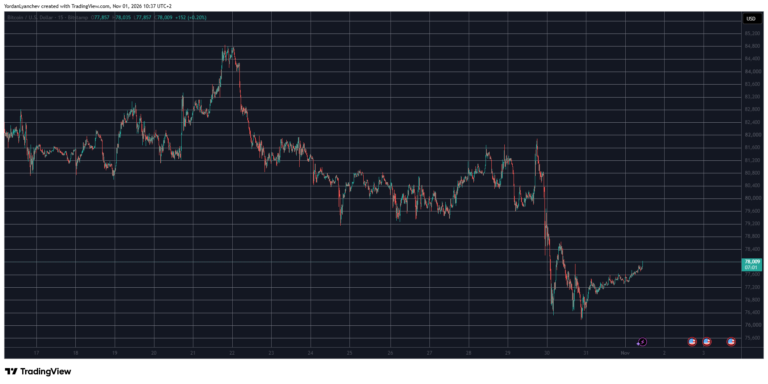
BTC rose from under $65,000 to over $80,000 in a matter of days, while bullion rose from $4,350/oz to $4,700/oz before being rejected.
Analysts of the Kobeissi Letter argued that BTC’s growing correlation with the precious metal accelerated following the Treasury’s decision, with investors increasingly viewing both as a hedge against currency depreciation, even as gold lost much of its gains.
Grayscale head of research Zach Pandl has supported this narrative, noting recently that the bitcoin-gold correlation has increased from near zero at the start of the year to over 50%. At the same time, relations with Nasdaq have moved in the opposite direction.
With the U.S. federal debt topping $40 trillion, persistent government deficits, and concerns about the long-term purchasing power of fiat currencies, the so-called “depreciation trade” has returned to the forefront.
Both BTC and gold have limited supply characteristics that may make them attractive according to this thesis, despite the cryptocurrency’s famous volatility.
Further from Nasdaq
The other part of the equation could be just as important since BTC’s 90-day correlation with the Nasdaq 100 has fallen from over 60% to around 30 to 33%. This is a major shift from previous periods, where the cryptocurrency frequently behaved as a high-beta technology asset, moving alongside growth stocks when financial conditions eased and vice versa.
The August rally was a stark example of the opposite, with BTC gaining over 20% in a matter of days while US stocks struggled. As previously reported, Bitcoin had underperformed the S&P 500 for about two-thirds of trading days over the previous three months before suddenly reversing that trend.
This divergence suggests that investors are increasingly valuing bitcoin for its scarcity and monetary properties rather than treating it simply as a speculative risk asset.
However, this significant change in trend does not mean that the relationship with stocks has completely reversed. Friday’s reaction to the strong US jobs report suggested a higher correlation between the two, with both asset classes falling.
Bitcoin-Gold Link Hits 6-Year High as Tech Correlation Fades: Why It Matters appeared first on CryptoPotato.
About the Author