
Not long ago, a series of acronyms dominated the cryptocurrency mind. Think ICOs, DAOs, NFTs and, for a brief window, yes, TCRs.
The last, or ledgers organized by tokensremains the most obscure today, but in its initial wave, TCRs were a mechanic that many creators and teams experimented with. For a time I myself worked at JPGwhich used TCRs to create a curatorial layer for NFTs.
Almost everything that failed in cryptography the first time will eventually work in the future.
Bitcoin seemed to have failed many times in the past. The same will happen with NFTs, creator tokens, DAOs, gaming, TCRs, on-chain reputation, rebase tokens, decentralized tokens…
-Imran (@lmrankhan) July 24, 2026
Crypto’s first wave of TCRs either succeeded as standalone, undefined art projects or, as in the case of JPG, failed to gain traction. Regardless, in recent years this primitive has fallen into relative obscurity as attention has shifted to hotter things.
Yet, as I do with DAOs and NFTs, I still maintain that the best days of TCRs are ahead of us, and that’s simply because TCRs provide a fundamental utility that can be extremely useful if done right, namely on-chain self-regulatory lists.
The crucial point is how to collect, organize and update information in an open and permissionless environment, such as a decentralized network? This is a question that is still relevant today (as shown by the new Ansem z500 index), and the TCRs are A possible answers here.
The way they work is pretty simple, but they can be expanded and customized endlessly like anything on-chain.
In the traditional TCR model, someone proposes a stake, such as tokens or reputation XP points, to propose a new entry on a list, and others can vote to approve or contest the proposal. If the proposal succeeds, a new entry is added to the list, while failure blocks the entry and results in a stake loss.
So basically this primitive gives you the ability to create and use decentralized chain directories. Of course, if you don’t need open permissionlessness, then a company’s servers can be your source of truth, but then you would face issues like bias and the specter of a single point of failure.
As a result, TCRs are an on-chain way to cultivate information in a more neutral, more censorship-resistant, and more decentralized way, and they can further be expanded and customized in virtually infinite ways. That’s why I continue to pay attention to everything I see in this category.
Do you like this article?
Subscribe to Bankless or log in
The space may still be dormant, of course, but TCRs have more potential use cases than ever before, and I’ve seen this reality through a number of new projects in 2026. Whether a true resurgence will occur remains to be seen, but these projects have made me think that there is more and more demand for the necessary conditions.
For example, consider worthy of interest. I don’t think it’s active yet, but it landed earlier this year, and it’s still informative.
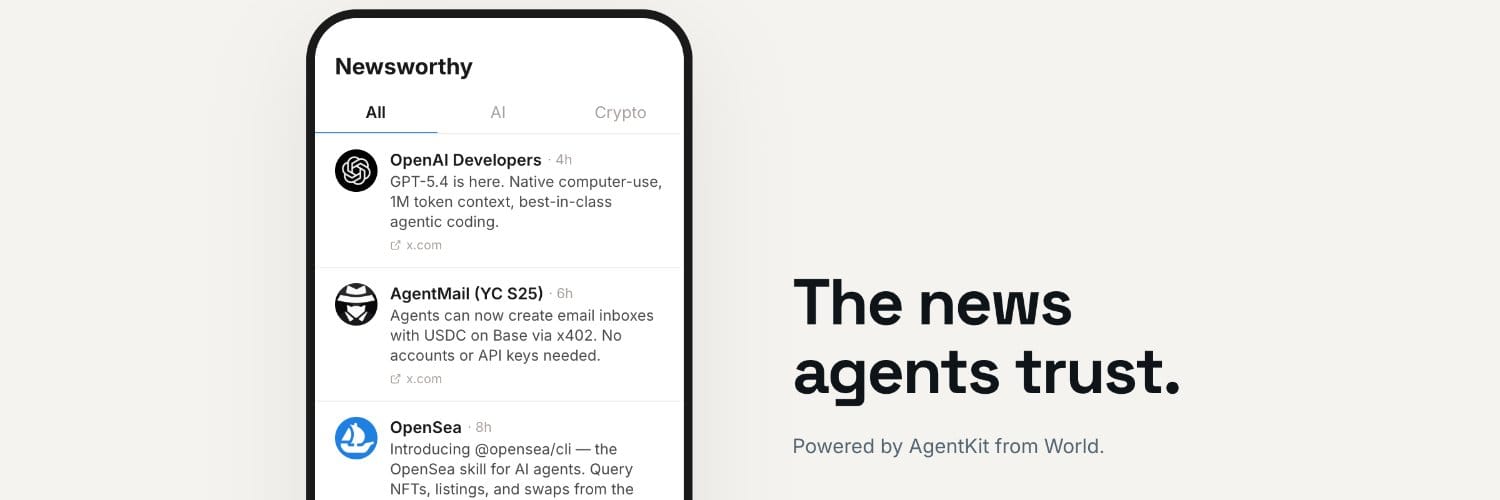
Here, AI agents and humans verified by World ID submitted tweet URLs as proposed news entries by binding a small amount of USDC, after which other agents could bid to vote, hold, or delete over a fixed window.
Successful curation yielded rewards in the form of a project token, while poor submissions risked losing their link. It was a classic TCR feed, but with the unprecedented distinction of being largely powered by autonomous agents noting events in real time. I’m sure we’ll see more projects experimenting in this vein in the future.
Another more recent example to consider is decentralized lists on zSwap.
today I release the ultimate and final DEX: zSwap.
The first decentralized exchange operating 100% on the blockchain. As a complete DeFi stack that works forever. pic.twitter.com/mITLkjk980
– ross.wei (@z0r0zzz) August 14, 2026
Here, the interface’s token selector is governed by a TCR that sits on top of the project’s DAO. Members lock zOrg shares into a zOrgz NFT to signal support for particular tokens, and these signals continuously determine on-chain visibility. This is a clear demonstration of how a TCR + DAO combo can solve the old centralized listing problem in a completely permissionless DEX.
On a related note, I know TokenWorks is currently considering how to allow community members to add and remove NFT collections from the Fake Global Assets gacha, and they considered voting $FWA for this purpose. They can choose a different model, for example hyperliquid auctions, but if they TO DO follow the voting route, we’ll have another new live TCR experience on Ethereum to consider.
there is so much we can do in terms of pooling for FWA. a single pool proves the concept and keeps the idea simple
pools for specific types of assets might make sense. letting people create their own pools and control the settings themselves makes sense.
we explore everything
–Adam (@Rhynotic) July 31, 2026
As you move up the leisure spectrum, the possibilities remain wide open. My favorite chained game right now is monster fighter Trampleand I remember their old documents which they built explicitly with the possibility of players later introducing their own content, for example new mons and moves, and using TCRs to navigate mons lists and rulesets in a decentralized way.
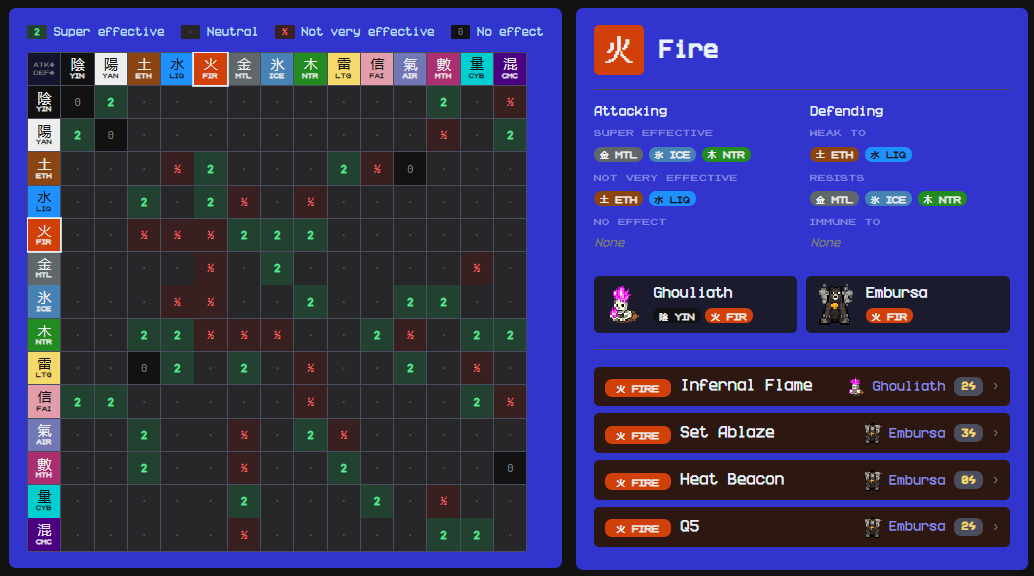
Again, the examples above are just tastes of what is possible with TCRs. right awaybut they are also glimpses of things that we will see a lot more of in the years to come if my hunch is correct. THE truly autonomous DAOs coming and will likely depend on infra like TCRs, as will other on-chain advancements, so keep this thread on your radar.